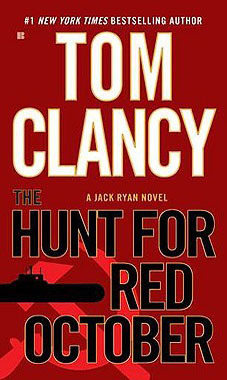
The Hunt for Red October, written by the now-famous Tom Clancy, has always been one of my favourite books to read on a plane. Not because it’s too long and a behemoth to carry around, but rather that its story will grip you for the duration of the flight and keep you awake. It’s got a thrilling plot, Cold War politics and naval jargon all rolled into one package, so what’s not to like?
For those of you who haven’t had the chance to read this book, it tells the tale of Jack Ryan, a CIA agent, and his interesting encounter with one of the latest Soviet submarines, the Red October, at the height of the Cold War. The Red October is outfitted with state-of-the-art stealth technology that could render it invisible to American radar, so when the submarine’s captain and officers all decide to defect to the United States and bring their ship along with them, both Washington and Moscow are whipped into a frenzy as each side scrambles to grab the submarine’s precious technology for themselves. Ryan himself, meanwhile, gets roped into all this mainly because he was the one who figured out the Soviet captain’s plot.
The story is definitely a fun and intense one, with the author’s thorough research of naval technology shining throughout the book as he translates mere numbers on control panels into painful moments of anticipation and suspense. All the characters have their own distinctive characteristics as well, with every Soviet submarine officer having their own separate motivations for defecting. At the same time, it’s quite funny to read about the cultural differences between America and the Soviet Union, which rear their ugly heads out when officers from both sides begin interacting with each other.
That said, this book isn’t without its flaws. For starters, there might be a bit too much technical detail here for its own good, boosting the total page number to a whopping 650. Also, this was written during the Cold War, so expect a lot of bias towards American freedom. Aside from that, however, it’s a fun read. Do grab it if you haven’t.
TL;DR:
The Good: Intense, suspenseful plot will keep you in your seat for hours, very accurate technical detail ( the guy did his research here)
The Bad: It can get very long, you may find yourself lost/drowning in technical jargon halfway through
The Eh: It’s set during the Cold War, so there’s a lot of pro-American stuff here
Conclusion: If you need something to pass the time with on a plane, read this. Or just read it when you can.

 A Layman's Reviews