In this part, I’ll be going over how to paint a model, as well as give some brief tips for decals and final assembly.
At this point, I will assume that you have a competent airbrush and/or spray paint, and that you have followed all appropriate safety procedures to ensure you don’t suffocate of toxic fumes before actually spray painting. With that in mind, here’s some brief tips regarding spray painting:
- Thin your paints
I cannot stress how important this is. If you get your paints too thick, you will end up clogging your airbrush as I have many times before. If they are too thin, you will end up spraying coloured thinner on your model and ruin it.
So please, thin your paints appropriately using some pipettes to help you through your way.
When thinning acrylic paints, I would usually thin them at a 1:1 paint-to-thinner ratio, while it would be at 1:2 or even 1:3 for lacquer paints. I give different ratios as it could be different for each paint and brand. If in doubt, you could just eyeball it and add thinner to your paint until it feels and looks like liquid and not like some paste.

Once you’re done with that, pop the paint in the airbrush and apply paint on the model. But before that:
2. Use primer
I would suggest applying some hobby primer on the plastic before spraying, as it lets the paint stick better on the surface. I personally use Tamiya primer from a spray can, though there exist primers in paint jars that can be thinned before spraying.
3. Keep your distance
When spraying paint on the model, it’s usually best to keep you distance between the nozzle and the plastic to ensure maximum coverage and that you don’t end up spraying too thick of a surface on the plastic. It has happened before, and it isn’t pretty to watch.
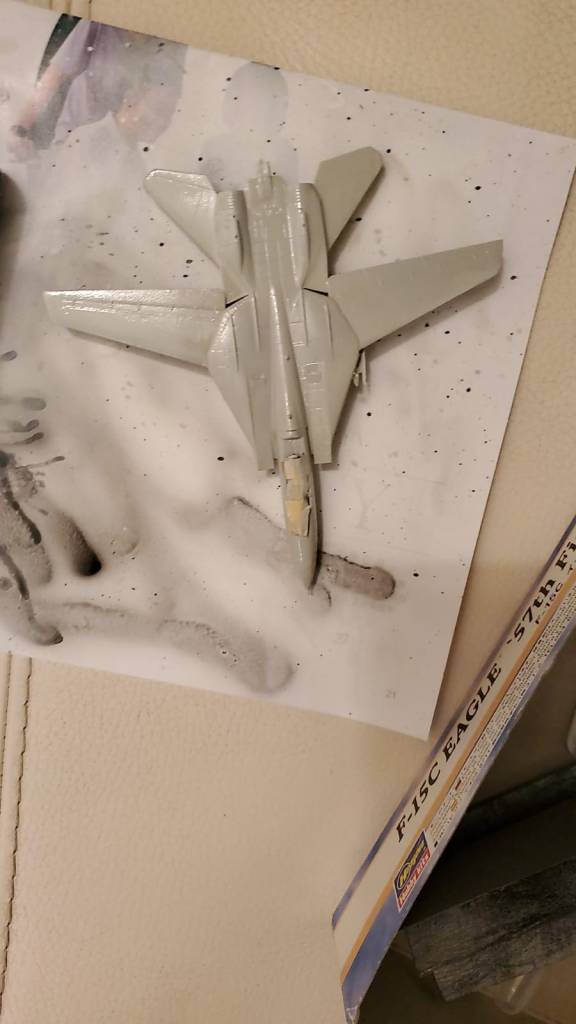
As long as you keep your distance, spray thin but even coats of paint on the model, with about 2-3 coats being the optimal amount. Don’t worry too much about paint drying as it seems to do so very quickly in my experience.
As long as you keep these tips in mind, it shouldn’t be too hard to achieve a consistent coat of paint on the model, and you should be in business.
Once you’re satisfied with your paint job and have let the paint settle enough, it’s time to apply decals and the finishing touches.
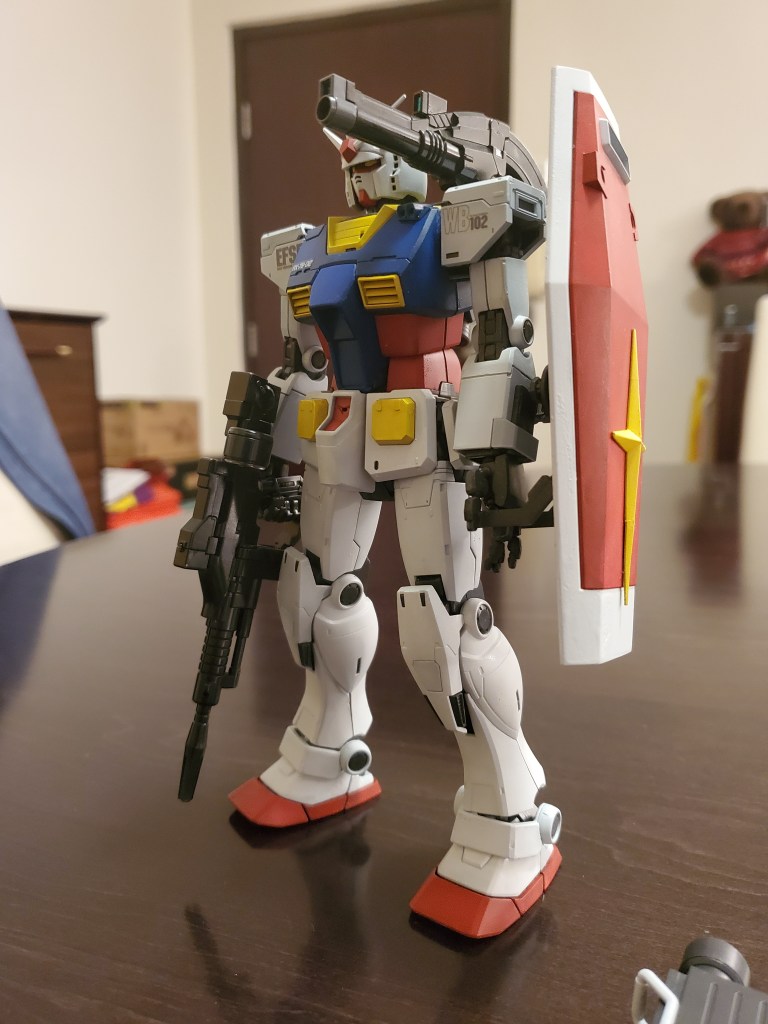
For any small tools and accessories, I would just advise using enamels or acrylics and a brush to apply paint on any necessary areas to give them hints of detail.
As for decals, I would strongly advise using decal solution before starting. Usually you get waterslide decals with your model kit, which require you to cut them out and soak them in water before applying. I would suggest using warm water, so that the decal can slide off effectively onto the model and won’t break up that easily.
Once you’ve got the decal on the model surface, and you’ve ensured there are no pesky air bubbles preventing the decal from sticking, add some mark setter to make sure the decal stays there, and doesn’t flap off when the wind blows. When in doubt, add some decal softener so that the decal literally binds to the surface. With that, you should be set.
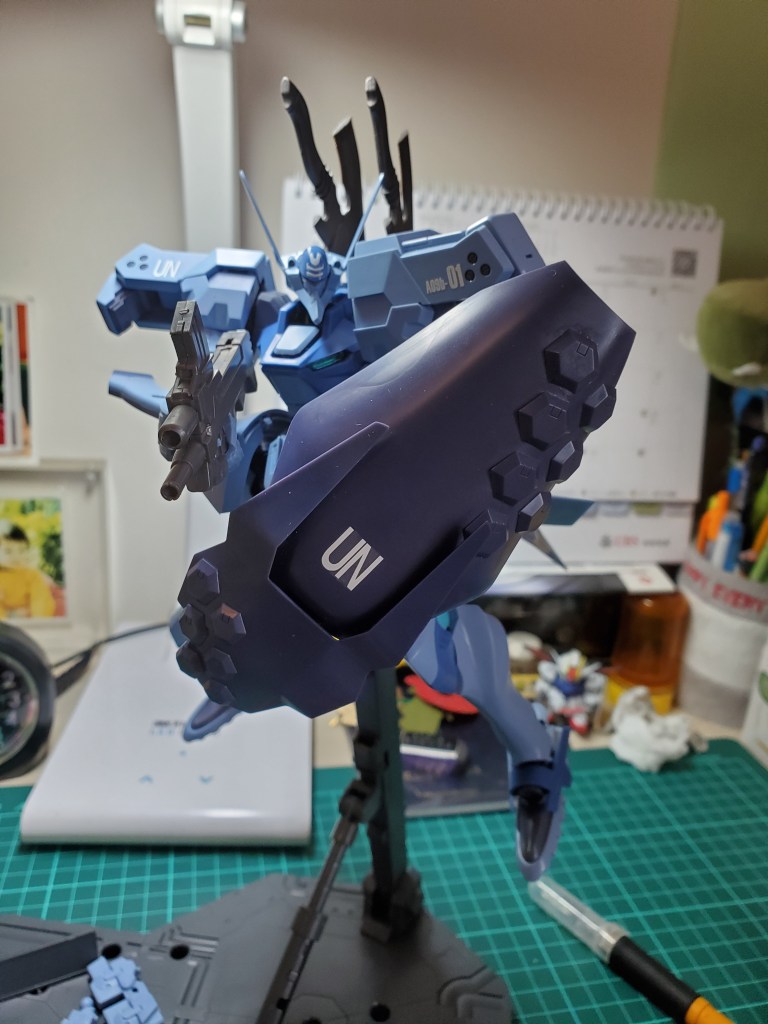
Another thing worth considering is using very thinned black or brown enamel paint to apply on any panel lines or bolts on the surface of the model to give it the illusion of depth. I tend to use it quite a bit for my sci-fi models, and it helps certain surfaces to pop out and gives it some depth.
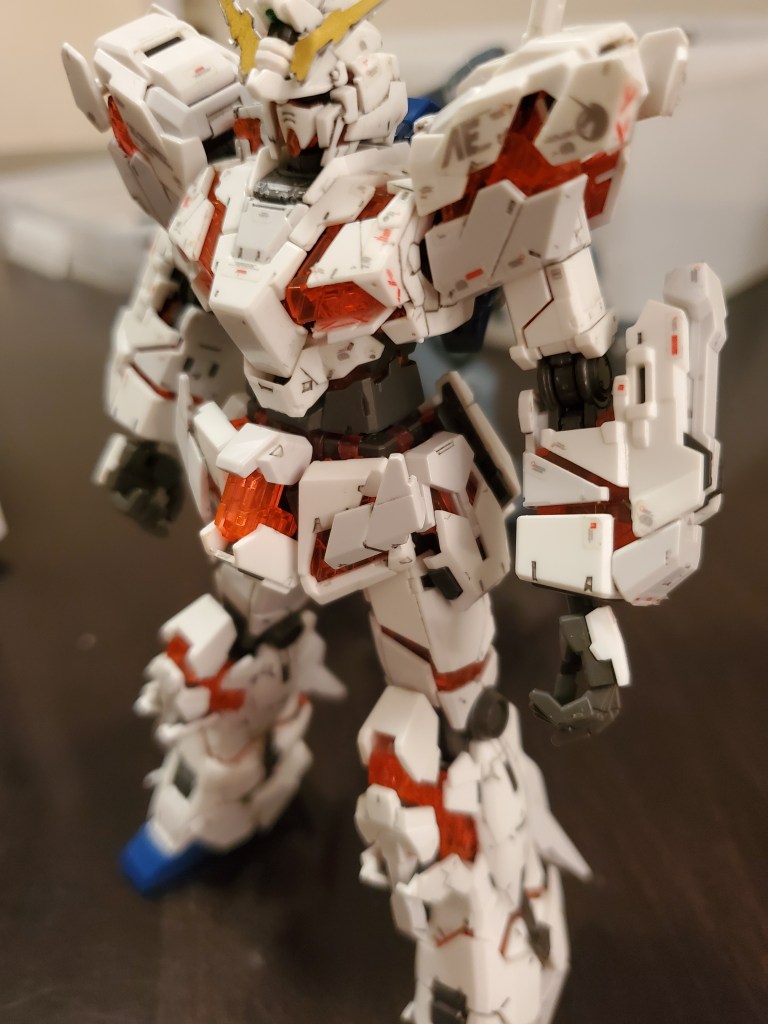
I won’t go over weathering here as I don’t think it’s necessary for an excellent model, and it can get very complicated for a beginner. But if you want to find out more, there are many great tutorials on the web explaining it better than I could.
Finally, you may or may not want to apply a finishing coat to protect the paint job and the decal from the elements, and preserve your hard work. You can either apply a dull or gloss coat depending on your preferences, and both will give great effects.
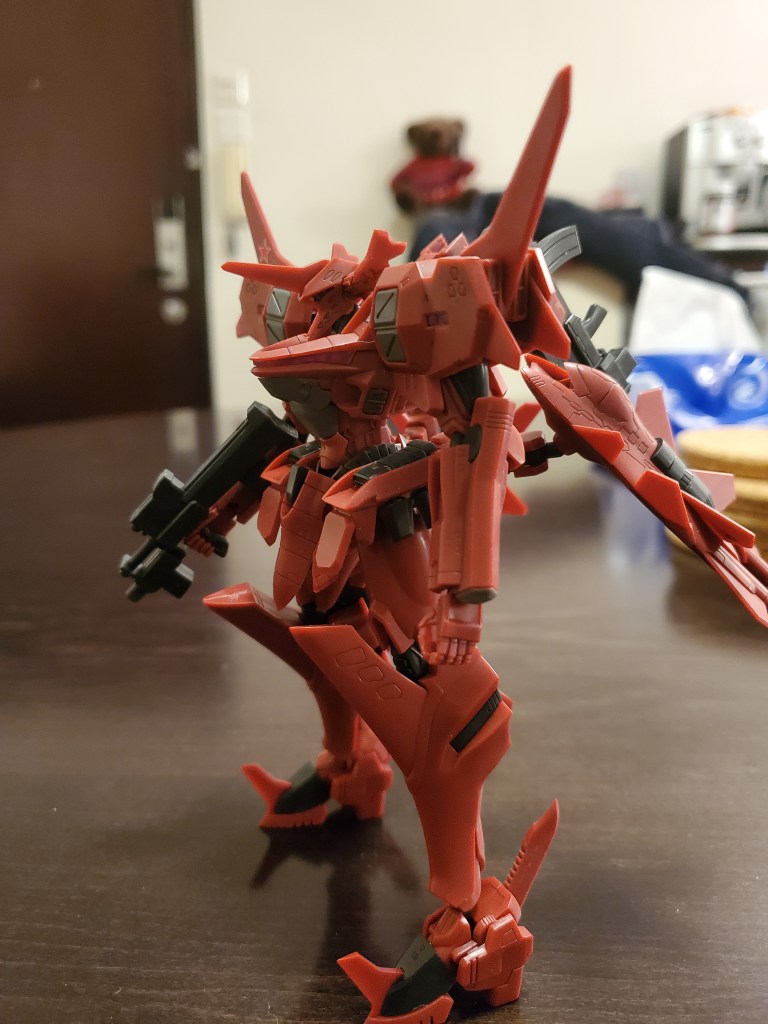
That’s probably all I have as advice and tips for beginners in scale modelling based on my experience. Everyone will have their own challenges and successes in this hobby, but the most important thing, in my opinion, is that everyone has fun in doing so. Don’t feel discouraged by others’ masterpieces, and just go at your own pace. You’ll get there someday.

 A Layman's Reviews