Movie (Series) Review: Kara no Kyoukai

Interesting, no?

Before I start the review itself, I should probably clarify a few things regarding the behemoth that is Kara no Kyoukai, as well as some of its connections with other types of media:

  1. It’s a movie series of about 9 films and a short addendum in the form of a 30-minute montage. Each film (save two of them) will probably eat up an hour of your time, with the other two (I’ll explain which ones they are later on) taking up double the length. Don’t be deterred if you’re already getting cold feet- this will eat up less of your time than the Marvel Cinematic Universe, and be much more worth of it.
  2. You need to watch it in release order. Yes, the plot is completely out of place and jumps around from film to film, but that’s one of the compelling factors that adds to the sense of mystery and tension present in the series. DO NOT WATCH IT IN CHRONOLOGICAL ORDER. If you’re confused after the first watching, go back and watch the series again. It’ll clear things up a bit.
  3. Kara no Kyoukai is written by Kinoko Nasu, also responsible for writing other well-known visual novels and anime such as the Fate series, and as a result, shares some plot elements with other works written by Nasu. However, despite some plot callbacks and references, Kara no Kyoukai is considered by most to take place in a separate universe from the rest of Nasu’s works, due to some contradictions with later works.

You got all that? Good. Now into the review itself…

Obligatory movie posters

Kara no Kyoukai (or the Garden of Sinners as it is known in English for some bizarre reason) is not a very well-known anime. Nor is it a very contemporary one. The novels of the same name the series is based on come from 1998, and the first film was released in 2007, when George W. Bush was still in the White House and no one had heard of Thanos. As stated above, the films weren’t released in chronological order as part of the plot’s intrinsic structure, and the plot is so loaded and complicated that you might want to get a chart to write down everything that goes on. But despite all those factors against it, the series has been widely lauded by those who have had the chance to watch it for themselves and realise what a masterpiece they’ve found themselves. And believe me, it really is.

I’m not going to explain each and every one of the films’ plots in this review, since that would be spoiling the experience, but it would be rather unkind to just rant on about how good the series is without giving you some background. So instead, here’s some dough on some of the main characters that appear to help you better understand what’s going on:

All I can say is that the animators should get a raise

The woman above is Ryougi Shiki (Shiki is the first name here following Japanese naming traditions.) The intimidating dagger and cool-looking jacket notwithstanding, Shiki is a being of her own class. The glowing eyes you see in the image above are known as the Mystic Eyes of Death Perception, which basically allow her to see death in the form of red glowing lines and points. Cut them, and you’re toast. Not even supernatural beings like ghosts are immune to this. Personality-wise, Shiki is quite interesting. Initially, she was raised with two separate male and female personalities, which take control of the body whenever they each wish to, but after a car accident where she fell into a coma, she was only able to feel the female one, though she acts in a masculine manner to compensate for that loss. At the same time, she acquired her Mystic Eyes, and proceeded to start using them to get rid to supernatural threats to society. She might seem cold and detached (and harsh) when we first meet her, but over the course of the series, we slowly realise that she does have a heart somewhere.

The other main character is Kokutou Mikiya, and compared to near-invincible Shiki, he’s… relatively normal.

Actually he’s too normal

Mikiya basically serves as a character for us to relate to in the story, mostly because he’s the most normal one in all the crazy shticks that go on in the series. But that doesn’t mean he’s useless. He is actually quite helpful and altruistic, and also pretty faithful. Mikiya first met Shiki when they started attending the same high school, and since then, they’ve remained pretty close friends (I’m not using the term boyfriend/girlfriend here, cause initially their relationship doesn’t get to that level), even working at the same supernatural detective agency run by a puppeteer who’s secretly a magus(magus here just means magician). He’s got no special abilities, if you’d like to know, and he’s as useless as sand in a fight, but he does have a heart of gold, and does provide a welcome respite through the development of his relationship with Shiki.

There’s a bunch of other side characters, but I’m only going to list these two cause they basically form the backbone of the story. Even so, most( if not all) of the characters are pretty well written and executed, and those who have watched the Fate series may even find some similarities between the two in terms of characters.

The reason why I decided to talk about the characters before the plot is simply because the plot is a) non-linear and b) stretched out across 10 hours. But to get the gist of it, it follows the relationship of Shiki and Mikiya as they both work to solve the many seemingly random and supernatural mysteries that pop up, only for them to be interconnected in one way or another. That’s an oversimplified version of what happens, but while it seems simple, it’s not. In fact, it gets really deep, partially due to Shiki’s connection to all these mysteries and the nature of her powers.

Without going into too many details, the story has a consistently dark and grim atmosphere that deal with very sensitive themes such as drugs, suicide, murder, rape and so on. One defining example would be the first two minutes of the film, where we basically see a girl fall to her death to the tune of some harmonising vocals. Yeah. But even so, the writing does shine in these spots, as Nasu uses the best of his abilities to shock and suspend us whenever he sees it fit.

The non-linear plot, while initially annoying, actually helps the plot development quite a lot. When you first watch the first film, you’d find potentially nonsensical things being spouted by the characters and you might feel confused. Cue the 5th, and you’d be marvelling in awe at the genius of the writers. The fact that stuff gets thrown around helps to create more of a sense of mystery and suspense, that hooks viewers on and pushes them to go further.

That said, I do understand that some may find all this really confusing, and the initally slow pacing doesn’t help much, but once you get over that, I guarantee you that you’re in for quite a ride.

So I’ve gone on for a long time about the plot and characters, but that doesn’t mean the series is hampered by the visuals or music. On the contrary, they are what elevates Kara no Kyoukai to such a highly-regarded status.

The animation for the whole series was done by Ufotable, which would go on to continue adapting other works by Nasu or connected to him, such as Fate/Zero and Fate/Stay Night Unlimited Blade Works, both of which are held in high regard for their god-like animation. Clearly, the studio had to start somewhere to get that quality nailed down. And that ‘somewhere’ was Kara no Kyoukai.

Without delving into spoilers, here’s a scene from the first movie, which was produced in 2007:

This was just the first few minutes

This was made 12 years ago. And it still looks amazing. That’s how high the production standards were for this series. The fights, while not as plentiful as those in an Ugandan Wakaliwood movie, shine when they do with their carefully choreographed movements and camera angles. I mean…

Watch at your own risk if you don’t want mild spoilers (from the fifth movie)

The music adds yet another layer of epicness and mystique to the already ominous atmosphere and tone. If you’ve watched the two clips above, then you’ll note the chorus in the first and the ‘epic fighting music’ style instrumentals. Yuki Kajiura, known for composing scores for other shows such as Fate/Zero and Sword Art Online(ok SAO is a bad example, avoid this one like the plague), doesn’t fail at all when it comes to composing epic music soundtracks, and even elevates the viewing experience to an all-new level. Kajiura even had a completely new band, Kalafina, created to make the ending songs for the movies, and the results were so spectacular that Kalafina continued soldiering on and making songs for other anime until 2018 when they broke up due to unfortunate circumstances.

It’s clear that from my long-winded explanations and rants, I found Kara no Kyoukai to be an epic experience. And it is. If I’ll be honest, though, as amazing as all the films were (well, the 6th was perhaps a bit off, but it was understandably necessary), if I were to choose a favourite out of the saga, it would have to be the 5th instalment, Paradox Paradigm. I wish I could explain more about why, but to avoid spoiling you all, let’s just say that you should prepare to have your mind played with in a very unpredictable manner and get good headphones to listen to this epic track again and again to recall the feels you get from the scene it plays in:

🙂

Or if you just want to recall some epic fights, listen to this instead:

I think it’s clear that I hold the soundtrack in very high regard

So if you happen to have stumbled across this review (or others) and are still a bit undecided about whether you want to watch it or not, and have the time and effort to spare, let me put it this way:

THIS IS A MASTERPIECE. GO WATCH IT NOW.

TL;DR:

The good-A lot. Masterfully executed writing, stunning visuals, godly soundtrack, deep thought-provoking themes, very likeable and relatable characters, epic fights etc. etc.

The bad-Admittedly it can get very confusing at times, slow pacing at first, sometimes there’s too much exposition

The ‘Eh’- The only legal way to watch this with English subs is buy spending $300 on some Blu-Rays from America. For some reason, German and French dubs exist. You may have to ‘sail the high seas’ to watch this.

Conclusion: WATCH IT. YOU WILL NOT BE DISAPPOINTED AT ALL. AT LEAST I WASN’T.

Fun fact: Most people probably only knew of Kara no Kyoukai‘s existence through a certain smartphone game after blowing a few hundred dollars to get Shiki as a playable character. I would not advise people to do so unless they are desperate. Still, here’s the commercial:

Please don’t waste your money

Also, try to watch this in the highest definition possible for the best experience. Trust me on this.
Book Review: The Hunt for Red October

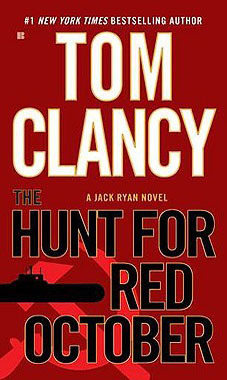
Red October, red cover

The Hunt for Red October, written by the now-famous Tom Clancy, has always been one of my favourite books to read on a plane. Not because it’s too long and a behemoth to carry around, but rather that its story will grip you for the duration of the flight and keep you awake. It’s got a thrilling plot, Cold War politics and naval jargon all rolled into one package, so what’s not to like?

For those of you who haven’t had the chance to read this book, it tells the tale of Jack Ryan, a CIA agent, and his interesting encounter with one of the latest Soviet submarines, the Red October, at the height of the Cold War. The Red October is outfitted with state-of-the-art stealth technology that could render it invisible to American radar, so when the submarine’s captain and officers all decide to defect to the United States and bring their ship along with them, both Washington and Moscow are whipped into a frenzy as each side scrambles to grab the submarine’s precious technology for themselves. Ryan himself, meanwhile, gets roped into all this mainly because he was the one who figured out the Soviet captain’s plot.

The story is definitely a fun and intense one, with the author’s thorough research of naval technology shining throughout the book as he translates mere numbers on control panels into painful moments of anticipation and suspense. All the characters have their own distinctive characteristics as well, with every Soviet submarine officer having their own separate motivations for defecting. At the same time, it’s quite funny to read about the cultural differences between America and the Soviet Union, which rear their ugly heads out when officers from both sides begin interacting with each other.

That said, this book isn’t without its flaws. For starters, there might be a bit too much technical detail here for its own good, boosting the total page number to a whopping 650. Also, this was written during the Cold War, so expect a lot of bias towards American freedom. Aside from that, however, it’s a fun read. Do grab it if you haven’t.

TL;DR:

The Good: Intense, suspenseful plot will keep you in your seat for hours, very accurate technical detail ( the guy did his research here)

The Bad: It can get very long, you may find yourself lost/drowning in technical jargon halfway through

The Eh: It’s set during the Cold War, so there’s a lot of pro-American stuff here

Conclusion: If you need something to pass the time with on a plane, read this. Or just read it when you can.

Book Review: I, Robot

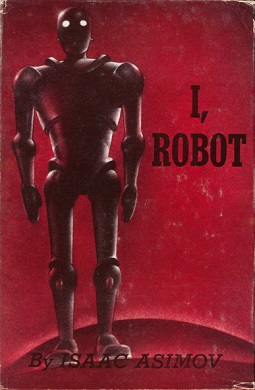
Please don’t go watch the movie

I, Robot, to say the least, has been one of the most well-known and influential science-fiction works of the 20th Century. Written by visionary Isaac Asimov, the book is famous for introducing key concepts of artificial intelligence, such as the 3 Laws of Robotics, that continue to influence the development of both science fiction and the ethics of artificial intelligence. It’s had such an impact on literature, that even today, the book still holds up quite well, and is cited by many as inspiration for their own works.

Consisting of 9 connected short stories spanning over more than half a century, Asimov serves to bring across to his audience what he perceives to be the evolution of robotics-from mute, crude automatons to massive artificial brains that dictate the flow of society- and express his hopes for mankind’s future with robotics. Granted, the stories were published in the 1940s, and so some of the story’s elements might seem dated, or even bizarre, but the basic themes and ideas remain just as relevant today, in an era where artificial intelligence is getting more intelligent than ever. 

Throughout the different scenarios presented in each story, Asimov aims to show how robots could help improve mankind, as long as their actions can all stay within the ‘three laws of robotics,’ and ensure that no harm can come to any man. As straightforward as it sounds, Asimov skilfully creates differing situations, such as a robot gone mad due to over-exposure to sunlight, that demonstrate how these laws could be bent or upheld in the most bizarre of ways. I wish I could explain it a bit more, but the scenarios are unfortunately too complex to summarise in two lines, and I’m afraid you’re going to read through the book to understand the very intellectual arguments put forward by Asimov.

While I was reading this book, I couldn’t help but realise that perhaps, instead of the human or non-human characters populating the different stories, Asimov intended for the three laws themselves to be the main character of the book as a whole. After all, they formulate the basis of discussion around whether robots benefit humans or not, and despite the never-ending evolution of robots throughout the course of the book, the words that comprise of these laws remain the same, and continue to form the basis for robotics’ advancement. At times like these, I wonder if Asimov was trying to predict the future, and urging us to place these safeguards in place for all types of artificial intelligence, lest a Skynet-esque incident occurs within our lifetimes. Given his intelligence, though, I wouldn’t be surprised if he was.

So, to sum up my review in a few words, if you want to understand artificial intelligence, or if you fear the advent of robotics, read this book if you want to understand more about these subjects, or at least to soothe your fears. Don’t worry, robots aren’t here to take our jobs, they’re here to improve humanity.

TL;DR:

The Good: Interesting theories regarding the development of robotics and artificial intelligence, 9 fascinating stories, a holy grail for sci-fi fans

The Bad: Can get very philosophical, quite a bit dated

The ‘Eh’: The plot is spread out across 9 stories and 50 years, the robots aren’t the main characters (for those who do want them to be)

Conclusion: Pick this book up. In the 21st Century, its core message is probably more relevant than ever

Book Review: The Everything Store

Pretty sure none of my orders have looked as neat as the box on the cover

Amazon. The company that changed the way we all shop, for better or worse. And did so within 20 years, surpassing titans such as Apple and Microsoft, making it one of the most valued companies on Earth, and its founder, Jeff Bezos, one of the richest living men. How Bezos, and his company, did so, though, had rarely been discussed in public, as a result of the corporate culture established. That is, until this book was released.

Through countless interviews with key people, as well as recounts of key incidents made by both the author and his interviewees, Brad Stone aims to establish a biography of both the now-legendary company, and its founder, that is as objective as possible, including both positive and negative perspectives of Amazon and its business practices, and bringing them under close scrutiny. In the book, he makes it clear that he wants to create as much of an all-rounded view of the company as possible, and as mentioned in the prologue, he made it clear to Bezos too, who didn’t have much objections.

Stone starts his narrative of the Amazon titan by going back to Bezos’ roots, a child born to his biological parents when they were barely 19, and later grew up with a different father along with his biological mother. As he slowly matured, however, it was clear to his teachers that he was naturally gifted, and so it was no surprise that he already had a lucrative job in the financial sector by the time he was 30. 

Being the man he is, though, Bezos decided to give up his financial stability, and invest most of what he had in establishing Amazon, a website originally meant to sell books, but very quickly expanded into different products. At the same time, Bezos went through with his vow to present consumers the lowest prices, going to aggressive ends to achieve his ends. Some of these ‘aggressive’ acts might include abruptly laying off entire departments, or tolerating miserable conditions in Amazon warehouses, just to squeeze out every last dollar for profit. All these incidents are presented in as much of an unbiased light as possible, and feature opinions from both sides of the debate. 

Stone additionally lists off some of Bezos’ own separate ventures, including Blue Origin, the potential SpaceX competitor, and his controversial purchase of the Washington Post, in an effort to understand what drives Bezos in his quest to change the world and its fundamental structures, to benefit consumers. Ultimately, his consensus is that as long as Amazon, and Bezos, continue to innovate, there is no stopping them unless a new competitor emerges.

For a book meant to be about business and finance, I found it to be surprisingly readable and relatable, with the author choosing to describe events in such a manner that lets readers be immersed in the situation. It’s also interesting to find such an objective view of Amazon’s business practices, with both their positive and negative aspects brought out into full view. For instance, while it it true that streamlining warehouse sorting processes can save money and bring profits, the workers are still maltreated and underpaid to ensure low costs. It’s definitely an issue that is quite concerning, and while there’s not much detail on how Bezos reacted to it, being in a position as reputable as the richest man on Earth, he should perhaps do (or have done) something about it as soon as possible.

Regardless of whatever views you may hold of Amazon, this is bound to be an enthralling read for all, despite the very technical subject matter, and an absolutely necessary addition to the book collection of any potential business disruptors.

TL;DR:

The good: Very readable, excellent anecdotes, unbiased views

The bad: Technical subject matter might not interest everyone

The ‘Eh’: It can get long

Conclusion: Recommended for everyone, especially anyone who wants to be the next Elon Musk.

Book Review: The Berlin Wall and the Intra-German border 1961-89

Pretty self-explanatory

For those who were born after 1990 in some country other than Germany, or have completely blocked this period of time out of their heads, in the wake of the end of the Second World War, Germany, as well as its capital of Berlin, was divided up among the 4 major victorious powers-the US, UK, France and the former USSR- with each nation responsible for administrating its own sector. However, despite the arrangement originally meant to be temporary, as Cold War hostilities commenced over ideological differences between capitalism and communism, Germany soon found itself to be split into two separate countries-the pro-Western Federal Republic of Germany (aka West Germany, or Bundesrepublik Deutschland), and the communist German Democratic Republic (East Germany, or Deutsche Demokratische Republik). Berlin, similarly, found itself split into East Berlin and West Berlin, with both halves developing in their own distinct manner. 

While both Germanies became considerably well-off in their own ways throughout their existences, the severe tightening of freedoms, comparatively less economic choices, and the ever-omnipresent presence of the secret police( in this case, the infamous Stasi) meant that many living in the East were willing to take the risk to flee to the economically richer West, despite travel being severely restricted due to tense relations. As time went on, however, the outflow of refugees became problematic, as many of these were sorely-needed intellectuals and medical professionals, and it became necessary for the East German government to enact procedures to make sure its citizens stayed inside its own territory. This was where both the Berlin Wall and the Intra-German border, the subjects of this book, came into play.

A diagram of the border

 Throughout its relatively short length, the author, Gordon L. Rottman,  aims to examine how the fortifications of the inter-German borders were established, how they were manned, and whether they were actually effective. Digitally-rendered images of the Berlin Wall’s defences, from border posts to vehicle ditches to multiple layers of barbed wire, are all recreated in stunning detail in these diagrams and charts, serving to demonstrate to the reader the extent to which the East German government took measures to safeguard its borders. Similarly, the less-known Intra-German border is explained in just as much detail, though with much more photos than its Berlin counterpart due to its longer length. Numerous photos, as well as the author’s own analysis, serve to show the extent of division in Germany throughout the Cold War. Towns and houses were cut up, families were separated along the lines, and even beaches were patrolled by border guards to prevent any prospective defectors from having second thoughts. 

What perhaps struck me the most, while reading this book, was perhaps how much scrutiny was being placed by the East German government on keeping its citizens in. From the rather expensive Berlin Wall (and its multiple incarnations over the years as technology improved) to the sophisticated equipment utilized by East German border guards, it’s definitely surprising how fearful and paranoid East Germany was, though it can hardly be blamed when it found itself on the frontlines of the Cold War with its Western counterpart, and given the many skirmishes in Berlin, such as the Checkpoint Charlie incident of 1961. 

Thankfully, as we all know, as the USSR imploded, and various Warsaw pact countries including East Germany faced widespread unrest, the Berlin Wall was finally torn down, and the two Germanies were reunited in 1990 after almost 50 years. At the same time, the Intra-German border lost its use, and was similarly removed by former East German soldiers contracted by the German Army. While the Wall and the border don’t exist anymore, remnants of their legacy remain in some isolated areas, and in the minds of Germans, reflecting the enormous task of reuniting a country after half a century of division and hostility.

For a history enthusiast like me, this book should be in your collection. However, those who are just casual readers and don’t have that strong of a grasp of politics may find themselves overwhelmed by the swath of technical detail and the many confusing terms (the book chooses to use German terms where applicable.) So while I can’t really recommend this to everyone, you are free to pick this book up if you’re interested.

TL;DR:

The Good: Detailed diagrams and graphs, countless historical photos for reference

The Bad: Very specialised subject, lots of technical jargon

The Eh: You might want to take a crash course in German history or ask your German friends on their take of it (if they’re old enough) before reading this

Conclusion: Recommended for some, but not all.

Book Review: Legend of the Galactic Heroes, Volume 1: Dawn

Genuinely good sci-fi

I’ve always been fascinated with science-fiction since I was a small child. From reading fantastical stories of men on the moon to building massive LEGO models of TIE fighters to binge-watching Star Wars: The Clone Wars, it’s safe to say that sci-fi had a profound influence on my early childhood days. 

As I grew up, this draw towards futuristic worlds continued to linger one within me, and I continued to be a sci-fi superfan, with sci-fi literature and merchandise still occupying most of my room.

Star Wars, for one, had a lot of sway when it came to captivating my hunger for sci-fi. Its simple yet rich story, likeable characters, fun technology and intriguing setting made up for why I liked it so much. In fact, I’m still trying to hunt down more Thrawn trilogy books from Timothy Zahn at the moment, who did quite a bit of work when it came to expanding the galaxy beyond a farmboy and a smuggler running around shooting and slicing people up while tagging a furball and a princess along. 

Don’t get me wrong, I still like Star Wars, and I do wish the franchise a bright future. But then, while searching for stuff on the Internet one day, I stumbled across something better. A lot better.

That, my friends, is the subject of this review, Legend of the Galactic Heroes.

For the uninitiated, LOGH, as I’ll call it from now on, started out as a series of 10 novels from Japanese author Yoshiki Tanaka written in the 1980s. Its claim to fame, however, lay in its anime adaptation of the same name of the 1990s, spanning across more than 100 episodes and quite a few movies, becoming one of the longest anime to date. 

A poster for one of the many movies encompassing the anime, featuring some of the main characters

As obscure as it is, both the anime and the novels have been critically acclaimed by almost everyone who has seen it since its release. The novel series, for instance, won the Seiun awards in 1988 (basically the Japanese Hugo awards), while the anime consistently ranks as one of the best in polls made even 20 years after the series ended. If you don’t believe me, search LOGH up, and you’ll find yourself gawking at the abnormally high ratings given by the anime fandom. Yes, it’s that good.

Unfortunately, due to the extreme length of the anime, the series remained obscure to the Western world, that is, until 2016, when Viz Media started to translate the novels into English for the first time. They originally said they would only be translating the first three novels, but given how they’re now at number 8, I’d assume that the books are selling like hot cakes. Also, there’s a new anime adaptation going on at the moment, Die Neue These, which considerably picks up the pace of the story, though at the expense of some of the plot.

…Yeah

So, with all the history out of the way, let’s dive into the review itself.

Set nearly 1000 years into the future, where mankind has colonised and moved to countless planets in space, the novel kicks off by dividing the known galaxy into two factions-the tyrannical, autocratic, but strong Galactic Empire, and the democratic, yet corrupt, Free Planets Alliance. Both have hated each other with fervour since they sprouted up, but given the exhaustive resources it would take to invade each other, they have been in a stalemate for 150 years, with the exception of tiny border skirmishes. Oh, and there’s also a third faction, Phezzan, which is basically the galactic equivalent of Switzerland, where everyone stores their money and people profit off of their neutrality.

The previously-mentioned stalemate, however, is quickly broken when two men on opposing sides quickly climb through their respective ranks. On the imperial side, we have Reinhard von Lohengramm, a ‘young brat’, as his admirals call him, a cunning military strategist and political idealist with a tendency to obliterate every fleet that stands before him. On the FPA, meanwhile, we have Yang Wen-li, a mildly older, but comparatively young (he’s only 30), tactician and strategist, with a strikingly calm and laid-back demeanor. On the surface, the two seem to have similar traits and abilities, but when one looks closer, they can’t be any more different. While Reinhard wishes to overthrow the current dynasty and become emperor himself, ushering in a new era of benevolent tyranny and creating a better world for his sister to live in, Yang didn’t even want to join the military in the first place, wishing to get a chance to resign and become a historian. 

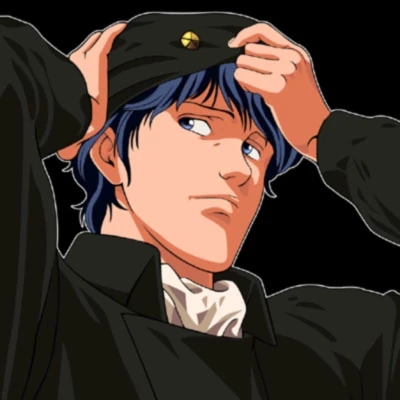
Reinhard the spoiled brat
Yang the reluctant hero

Over the course of the novel, we see how the two develop their political leanings and demonstrate their abilities through epic battles and tension-filled political incidents, but since this is just volume 1 of 10, they don’t exactly go full-on with their actions, rather taking time to interact with the world they inhabit and sow the seeds for the subsequent plot. Along the way, we get to see countless side characters, such as Reinhard’s childhood friend, Siegfried Kircheis, and Yang’s adopted ward, Julian Mintz, a young war orphan, that aid or impede the main characters’ actions.

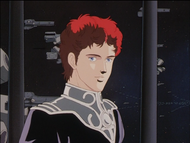
Kircheis and his blood-red hair

As you read this review, you might be wondering how this is better than other sci-fi properties, like Star Wars. Let me put it this way. In Star Wars, you get rather black and white factions, in the form of the evil Empire and the heroic Rebel Alliance. In LOGH, however, the situation is a lot more muted, and it’s a lot more grey-on-grey than one might expect it to be. Almost every character on either side is worth sympathising with, having their own understandable goals and thought processes, and if anything, both forms of government are depicted in equal light.

The comparison between democracy and autocracy is a strong theme, and will continue to prevail throughout the series as a whole. Through the eyes of the characters, we get to see how there is no perfect form of government. An autocracy would restrict one’s freedoms, but in the right hands, could lead to a strong and powerful country. A democracy, meanwhile, would grant everyone freedom, yet allow for mass abuse of power and corruption, with the massive discord in opinions resulting in not much being done while the people suffer. It’s subtle comparisons like these that really draw me into the story, and compel me to keep on reading. Add into the mix unrivalled technical detail (Mao, Jesus and Genghis Khan are all mentioned as hailing from the distant past), and blatantly obvious historical parallels between the plot and 19th century warfare, and you get something truly intellectual yet enjoyable at the same time.

Granted, the breadth of the content we’re talking about in this book might not interest everyone, and admittedly, the pace can drag on a lot if it wanted to. You might even get lost in the sea of characters bombarding you. But if you find yourself enjoying Star Wars, and want something better, check this series out. This is just volume one, and things only get better from here.

TL;DR:

The Good: Unrivalled technical detail, intriguing setting, fascinating characterisations, interesting (and intellectual) comparison of politics, wonderfully crafted story

The Bad: The pacing can get out of hand

The ‘Eh’: The equivalent of an army of characters can get confusing at first, historical references might fly over your head, and it can get very long

Conclusion: Highly recommended to everyone. If you can’t stand reading, watch the anime. You won’t be disappointed.

BTW, Here’s the intro to the new anime adaptation for those who are interested: